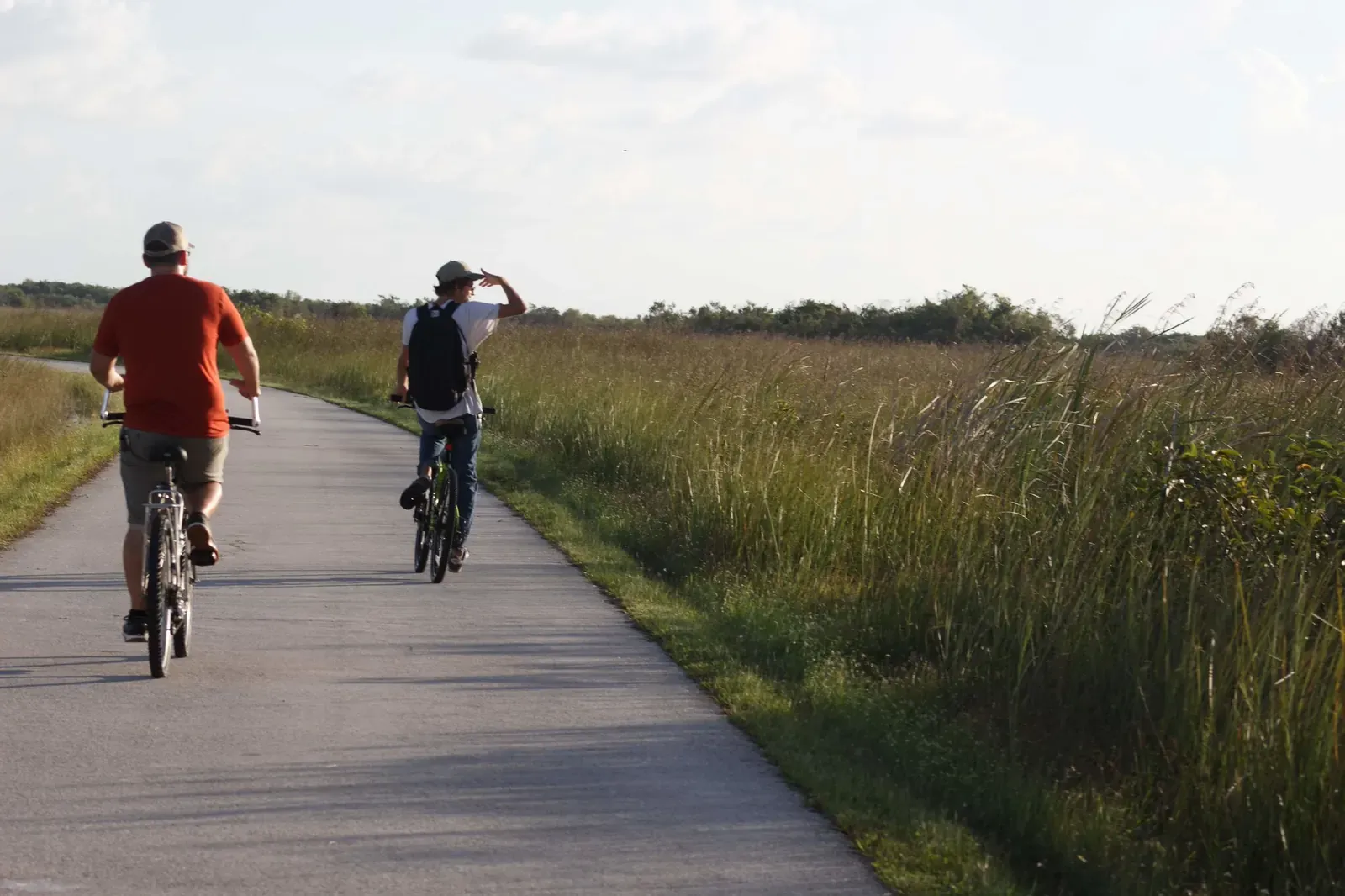
The Shark Valley bike trail is a flat, paved 15-mile loop with an observation tower about seven miles from the visitor area. Allow at least two to three hours, carry your own water, and choose the tram instead if distance or heat would make the ride uncomfortable. New to the area? Start with our Shark Valley guide, or compare the ride with the narrated Shark Valley tram tour.
Flat does not mean effortless. The open marsh offers little protection from sun or wind, and wildlife stops add time. A family should plan around its least confident rider, not the fastest cyclist. There is no need to complete the entire circuit to enjoy Shark Valley: a shorter out-and-back can be the better decision when conditions or energy change.
The Shark Valley loop trail, section by section
| Section | What to expect | Planning decision |
|---|---|---|
| Visitor area to canal-side route | Start of a paved shared visitor route | Check bikes, water and the weather before leaving |
| Canal-side leg: about 7 miles | Water and marsh views on the way to the tower | Allow stops without blocking trams or other riders |
| Observation tower area | A midpoint rest and wider view | Reassess energy before the remaining miles |
| Return leg: about 8 miles | The rest of the loop back to the visitor area | Keep water and daylight for the return, not only the outbound ride |
Use the posted route information and directions on the day rather than treating this table as a turn-by-turn map. Wildlife, maintenance and staff instructions can affect how you move through an area. The tower marks a useful midpoint, but it is not a pickup station where you should assume a rescue ride is available.
How long should you allow?
NPS recommends at least two to three hours and describes visits lasting roughly two to six hours. Choose the longer end if your group stops frequently, takes photographs or rides slowly. A fit cyclist’s moving time is not a useful promise for a mixed-ability family. The Shark Valley trail is the same paved road the tram uses, so plan to share it.
Before starting, set a turnaround decision rather than a speed target. Ask everyone how they feel during the first part of the ride. If a child is struggling early, shortening the outing is easier than discovering the problem far from the visitor center. Do not use the vehicle-gate closing time as your planned arrival back at the car; leave a practical margin.
Bring a bike or use the concessioner’s rentals
You may bring a suitable bicycle or check the concessioner’s current rental arrangements. Confirm availability, sizes, return deadlines and any reservation requirements directly before traveling. We do not quote a rental rate here because rates and availability can change independently of park admission.
For your own bike, check tires, brakes and fit before leaving home. Bring what you need for a basic mechanical problem, and make sure bottles and bags are secured. If you need specialized equipment, ask in advance rather than assuming the rental fleet can accommodate it. See the Shark Valley guide for arrival and parking considerations.
E-bikes, helmets and shared-road rules
NPS allows qualifying e-bikes on the Shark Valley tram road. Its guidance describes pedal-capable bikes with a motor under 750 watts; it restricts riding on electric power alone without pedaling to public motor-vehicle roads. Check the current NPS wording and your bike’s specifications before bringing it.
Riders under 16 must wear helmets. A helmet is a sensible choice for everyone, even on a flat paved road. The route is shared with trams and authorized vehicles; stop for them as directed, keep the way clear and follow the posted 15 mph limit. Pedestrians and wildlife make this an observation ride, not a training course.
Water, sun and weather
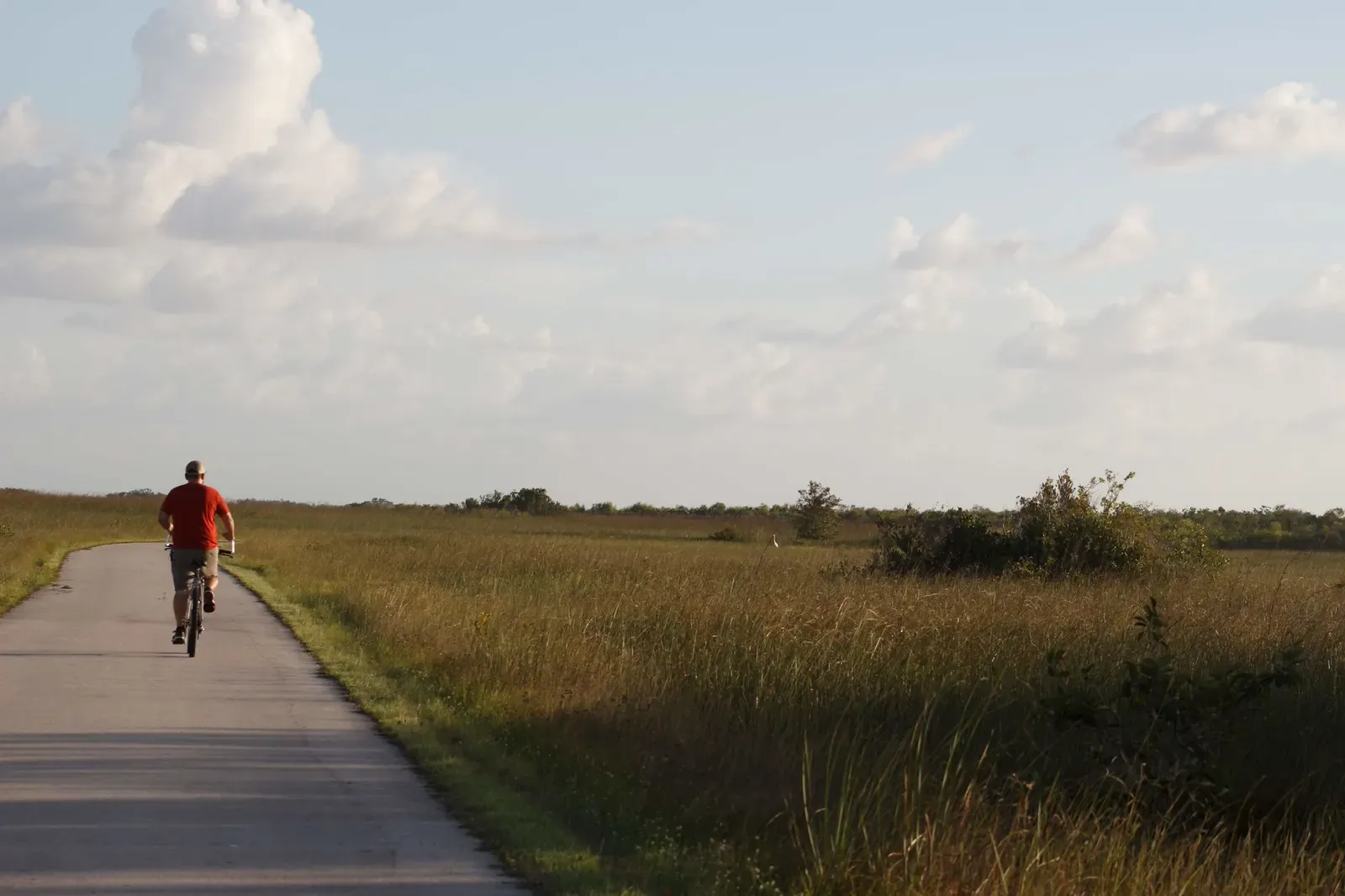
Carry enough drinking water for your whole outing. Although visitor information mentions a fountain at the tower, other NPS guidance warns that water may not be available. Do not make a working fountain the condition your plan depends on. Check supplies before you start rather than rationing from the first mile.
Use sun protection, secure a hat if wearing one off the bike, and bring a light rain layer appropriate to the forecast. In hot weather, an earlier and shorter ride may be more realistic than a full afternoon loop. Check current weather and park alerts before setting off. A thunderstorm forecast is a reason to reconsider exposed cycling, not simply to pack a camera cover.
What if an alligator is beside the trail?
Stay at least 15 feet away, and farther back when needed. Stop before you reach the animal; do not ring a bell at it, throw anything or attempt to squeeze past at close range. If the route is blocked, wait and contact park staff for guidance. Turning around may be the appropriate choice.
When you stop for photographs, keep your bike out of other visitors’ path and keep children beside you. Do not step toward the water for a better angle. Our alligator viewing guide explains how safe observation differs from approaching wildlife. The same consideration applies to birds, turtles and other animals along the road.
When the tram is the better fit
The tram offers narration and the same broad loop without requiring everyone to cycle 15 miles. It can be the more enjoyable option for a group with different fitness levels, limited time for equipment, or concerns about prolonged exertion. It still requires advance thought about weather, reservations and parking.
Choose cycling when stopping independently is central to your day and everyone is comfortable with the distance. Choose the Shark Valley tram tour when interpretation and a less physically demanding outing matter more. Neither option guarantees wildlife, and neither includes an airboat ride. Keep the rest of your day modest so you can enjoy the activity you chose.
If you want to add a separate private airboat experience, keep it distinct from the Shark Valley ride and allow enough time between activities.
Frequently asked questions
How long does biking Shark Valley take?
Allow at least two to three hours for the 15-mile loop, and longer for a relaxed ride with stops. NPS describes a two-to-six-hour range.
Can I bring my own bicycle?
Yes. Bring a suitable, checked bicycle and confirm current park access before traveling. Rentals are handled separately by the concessioner.
Are e-bikes allowed at Shark Valley?
Qualifying pedal-capable e-bikes are allowed under NPS rules. Check motor specifications and restrictions on using electric power without pedaling before your visit.
Is it safe to bike near alligators?
Stay well back, follow the park’s minimum 15-foot distance, and never crowd an animal to pass. Wait or seek staff guidance if the route is blocked.
Disclosure: Everglades Tour Guide is published by Captain Greg Mislow, owner of Airboat Adventures Everglades. We recommend AAE because we know exactly how its tours run. The rest of this guide is general visitor information drawn from public sources like the National Park Service. Last reviewed October 1, 2026.