For alligators in the Everglades, start with a boardwalk or established trail beside freshwater: Anhinga Trail, Shark Valley and Oasis are practical choices. Go with time to watch, keep your distance, and treat every sighting as a possibility rather than a promise.
This guide covers both Everglades National Park and neighboring Big Cypress National Preserve. They share a larger landscape, but entrances, fees and rules are not interchangeable. Choose the area that fits your day rather than trying to visit every location on this list. For a first trip, one substantial walk and one short stop usually leave more time to observe than a string of hurried parking-lot visits.
Map of the seven viewing areas
Choose one area for your day. This planning map is not a trail map; check access and local rules before traveling.
Best places to see alligators in the Everglades
Alligators mostly use freshwater habitats. Water levels shape how easy they are to see: as surrounding marshes dry, remaining pools and canals can concentrate wildlife. During wetter months, animals have more room to spread out. A quiet canal on one visit does not mean the habitat is empty, and a photograph from winter is not a forecast for a summer afternoon.
| Place | Useful season to consider | Time-of-day plan | Main reason to choose it |
|---|---|---|---|
| Anhinga Trail | Dry season; possible year-round | Start early for a comfortable walk | Short boardwalk and paved trail |
| Shark Valley | Dry season; possible year-round | Early arrival also helps with parking | Freshwater canal and longer exploration |
| Oasis boardwalk | NPS highlights November–May | Daylight stop along US 41 | Easy roadside viewing from a boardwalk |
| Kirby Storter | Dry season; access restricted | Daylight, after checking closures | Cypress habitat; only part is open |
| H.P. Williams | Dry season is a useful starting point | Daylight roadside stop | Short waterside boardwalk |
| Loop Road | Dry season; check road conditions | Allow unhurried daylight travel | Scenic drive with possible wildlife |
| Flamingo | Possible year-round; species differ | Visitor-center hours help with identification | Coastal setting is also crocodile habitat |
These are planning suggestions, not measured sighting probabilities. Early starts reduce exposure to the strongest sun; they do not guarantee that a reptile will be basking. A cool morning, cloud cover, rain and changing water levels can all affect what is visible. Ask a ranger about current conditions after you arrive.
1. Anhinga Trail: a straightforward first stop
Anhinga Trail starts at Royal Palm, reached through the Homestead side of Everglades National Park. The 0.8-mile round trip combines a paved route with boardwalk sections. It is a sensible option when a group wants a short walk rather than a long bike ride, with water close enough to observe from the established visitor route.
Slow down at open views and scan before moving on. Look for the outline of a head as well as an entire animal on shore. Give other visitors room and let children use binoculars from the trail instead of leaning over a railing. The adjacent Gumbo Limbo walk adds a different habitat without requiring a second cross-region drive. Our entrance guide explains how Royal Palm fits the Homestead route.
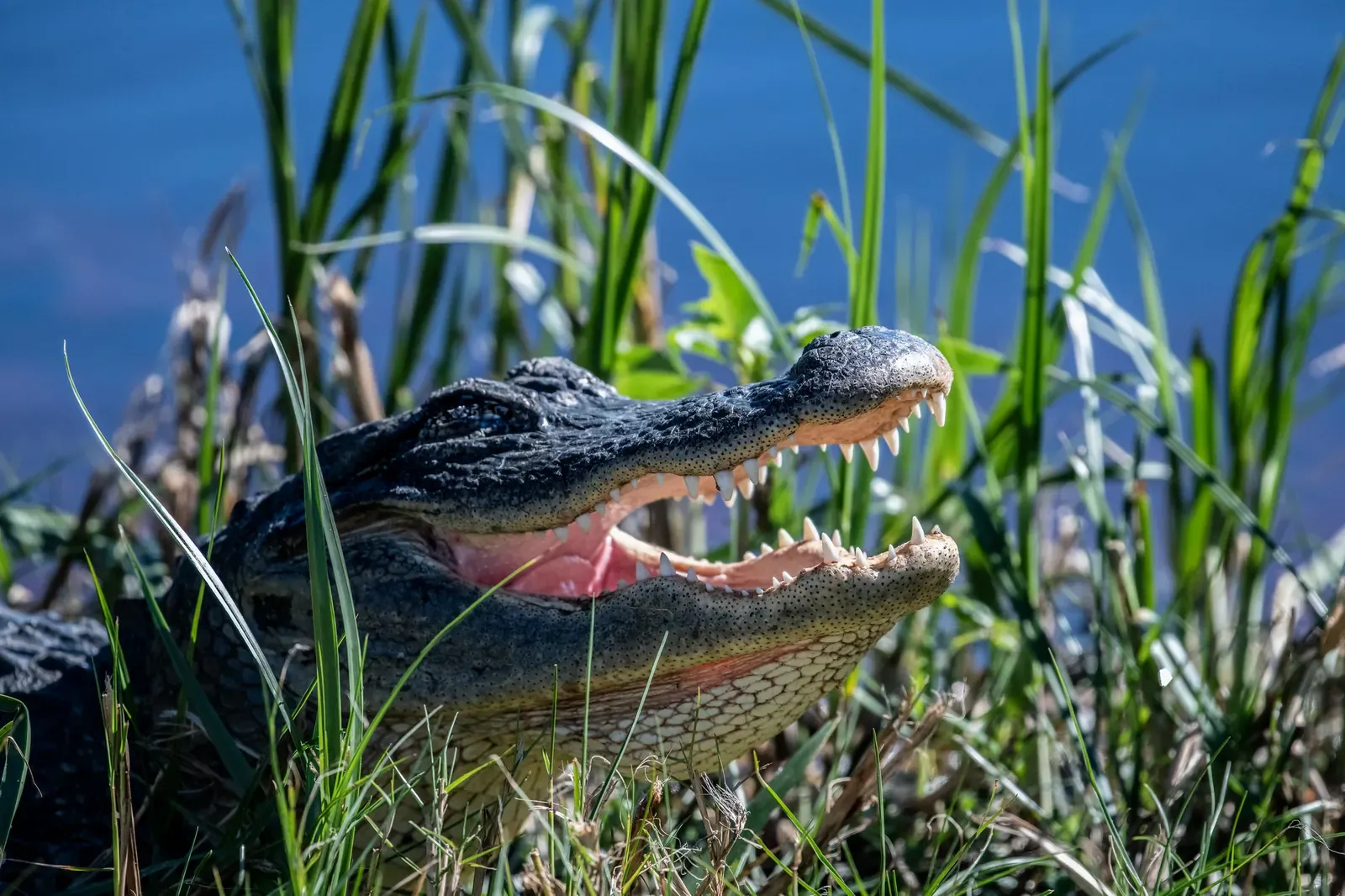
2. Shark Valley: canal-side walking or a longer loop
Shark Valley is on the Tamiami Trail side of the park. You can explore a short section near the visitor center, take the tram, or cycle the paved loop. A full circuit is 15 miles; seeing wildlife does not require committing to that distance on foot. Keep enough room to turn around safely and allow for the heat on the return.
The canal provides a place to look, but an alligator can also be beside or on the visitor route. Do not crowd it to pass or steer a bike toward it. Stop well back and wait; ask staff for help if the way remains blocked. The Shark Valley guide covers parking and activity choices so you can decide before you reach the entrance queue.
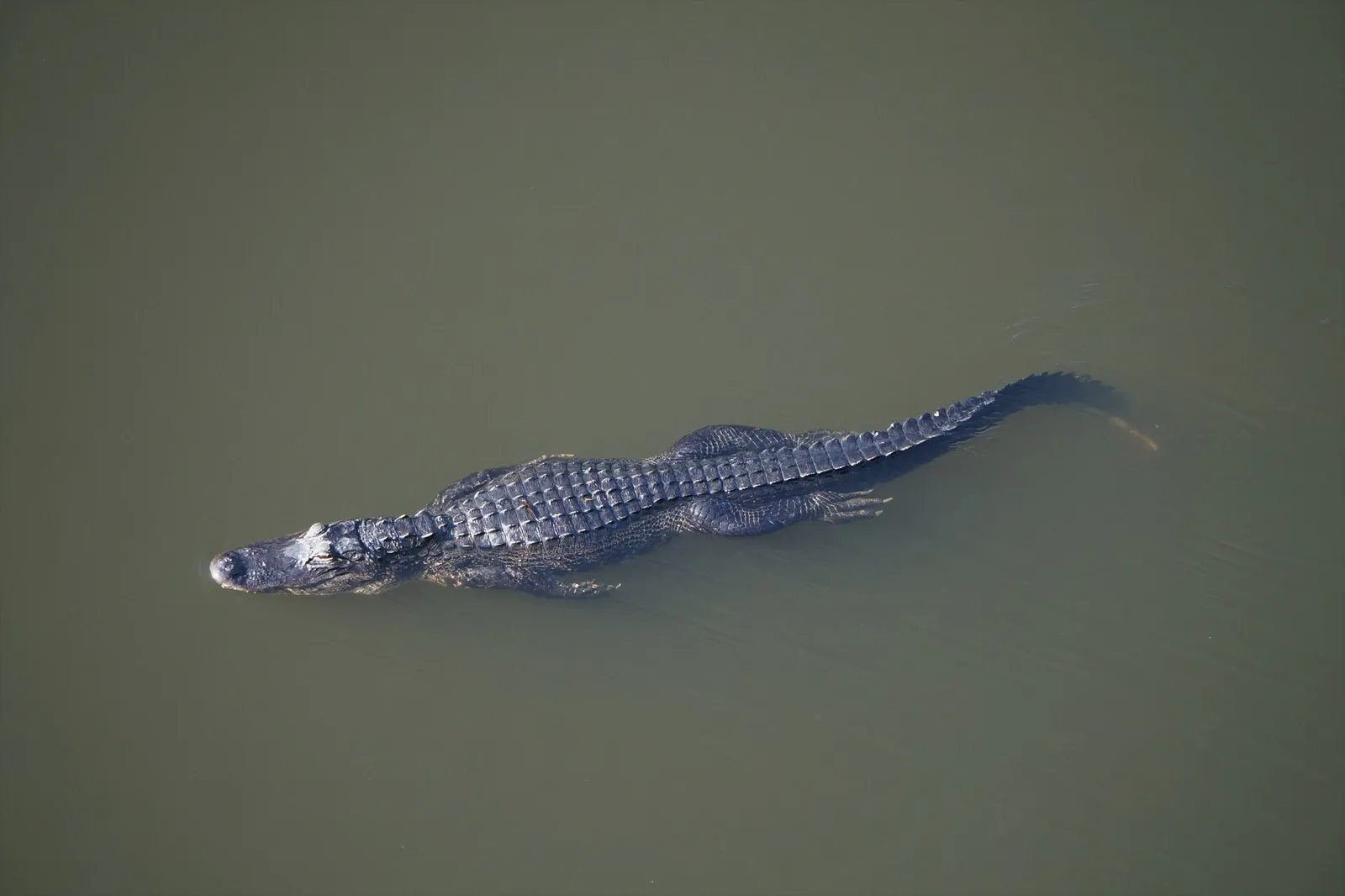
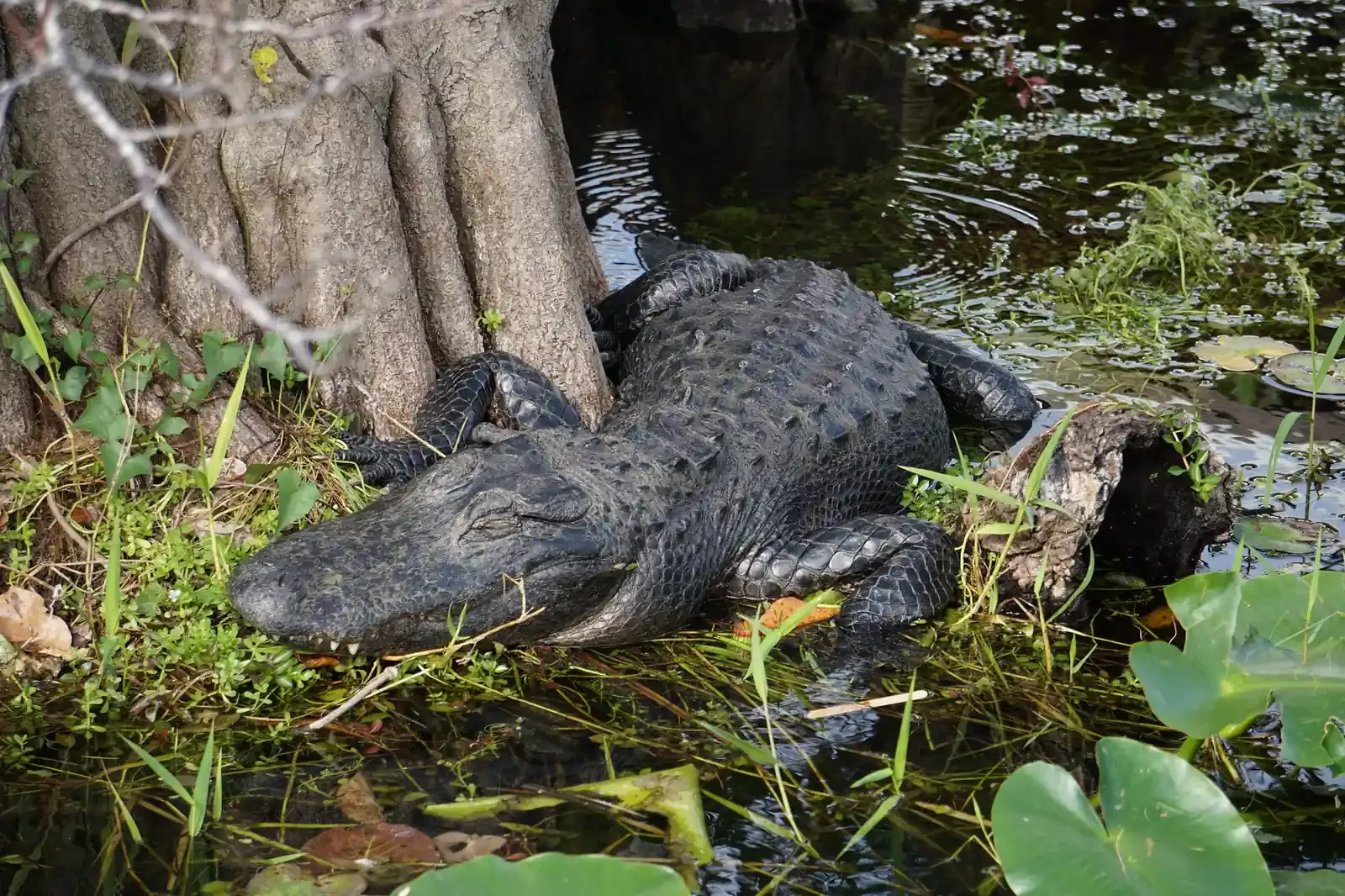
3. Oasis: a short Big Cypress boardwalk stop
The boardwalk in front of Oasis Visitor Center overlooks a canal beside US 41. NPS specifically identifies November through May as a useful viewing period when wildlife gathers around remaining water. Its accessible ramp and short route make this a practical stop for visitors who do not want a long trail.
Stay on the boardwalk and keep food packed away. A roadside location can make a wild animal feel familiar, but it is not an exhibit or a feeding area. Include time to look at turtles, fish and birds as well: the water supports a community, not just the species that brought you there. Read the NPS boardwalk information before planning access needs.
4. Kirby Storter: check the partial closure first
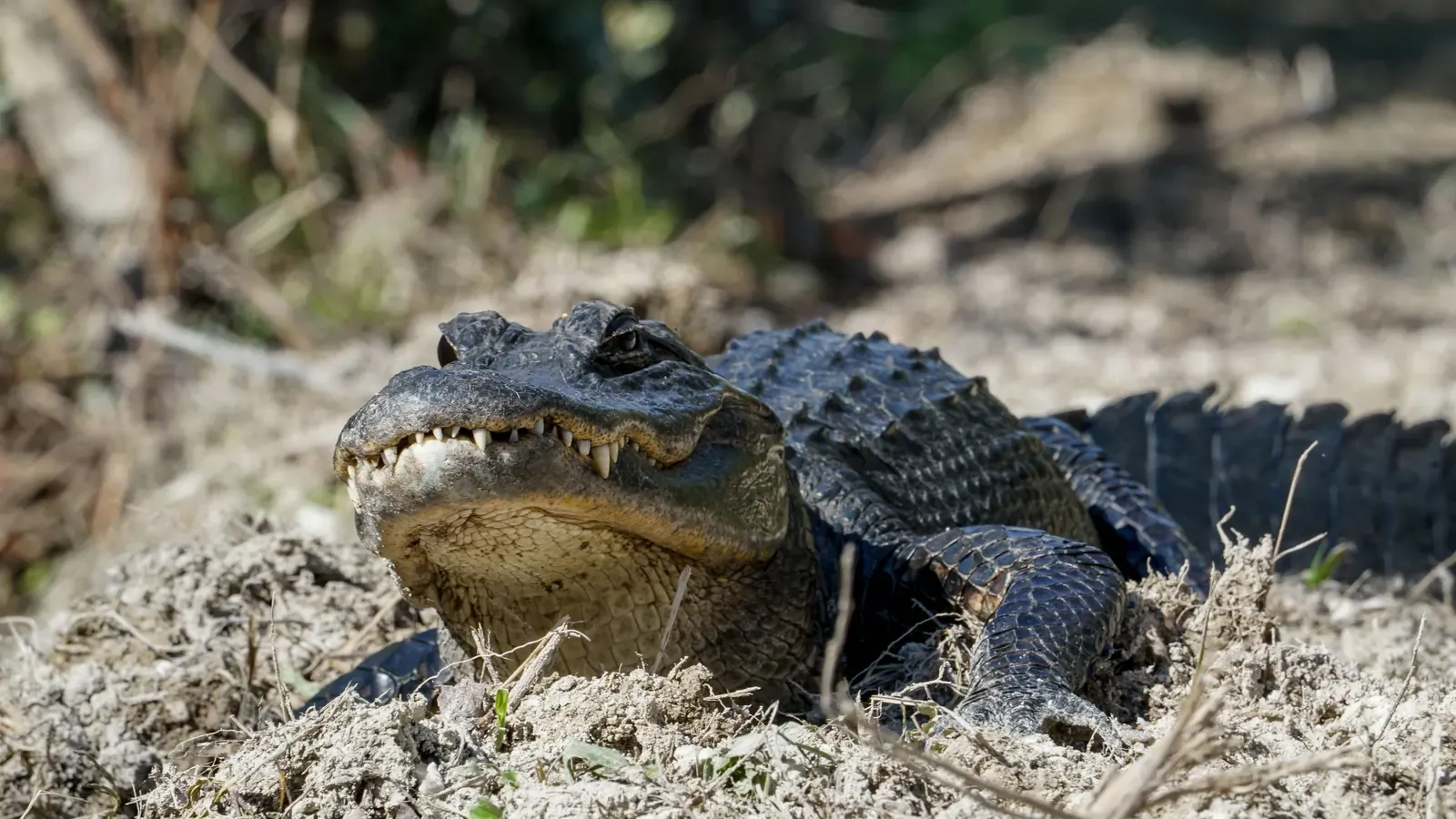
Kirby Storter introduces cypress habitat along the Tamiami Trail corridor. However, the NPS page checked on September 30, 2026 says the boardwalk is only partially open following a summer 2025 fire. Do not plan around walking the entire route or reaching a particular viewing point.
Follow the barriers you find on site. A closed section is not an invitation to walk around it through the swamp. If this stop is the main reason for your journey, confirm current access directly with Big Cypress first; otherwise keep Oasis or H.P. Williams as a flexible alternative. Closure information matters more than an older travel photograph showing the complete boardwalk.
5. H.P. Williams: a compact waterside stop
H.P. Williams Roadside Park provides a short boardwalk beside water in Big Cypress. It works as a deliberate pause on a US 41 itinerary rather than a separate full-day destination. Spend a few minutes looking across the surface and along the banks before deciding that nothing is there.
Use designated parking and the established viewing area. Avoid turning a wildlife stop into an improvised roadside crossing or a scramble down a bank. This is another place where a zoom lens or binoculars is useful: you can study an animal’s posture without changing where you stand. Check the linked NPS roadside-parks page for access updates affecting both this stop and Kirby Storter.
6. Loop Road: a scenic drive, not a sighting shortcut
Loop Road is a 24-mile Big Cypress scenic drive through varied habitat. It can suit visitors who enjoy slow observation from a driving route, but it is a poor addition to an already crowded schedule. Check road conditions and your vehicle’s suitability before committing, and respect private homes along the route.
Pull over only where safe and permitted. Never stop in a way that forces traffic around you to photograph an animal. Big Cypress’s scenic-drive guidance asks visitors to stay at least 25 feet from wildlife, a different minimum from Everglades National Park’s 15-foot guidance. More distance is appropriate whenever an animal reacts to your presence. Read the official scenic-drive advice.
7. Flamingo: know which reptile you are seeing
Flamingo belongs on this list with an important qualification: its coastal and brackish habitats are also associated with American crocodiles. Do not label every large reptile there an alligator. The visitor center and marina area can help introduce that difference, but no particular animal is guaranteed to be present.
Choose Flamingo because you also want Florida Bay and the park’s southern landscapes, not because you expect a quick alligator stop from Miami. Use our crocodile identification guide to compare snout shapes and habitat from a safe distance. Never get closer to inspect teeth or to improve an identification photo.
Best time to see alligators in the Everglades
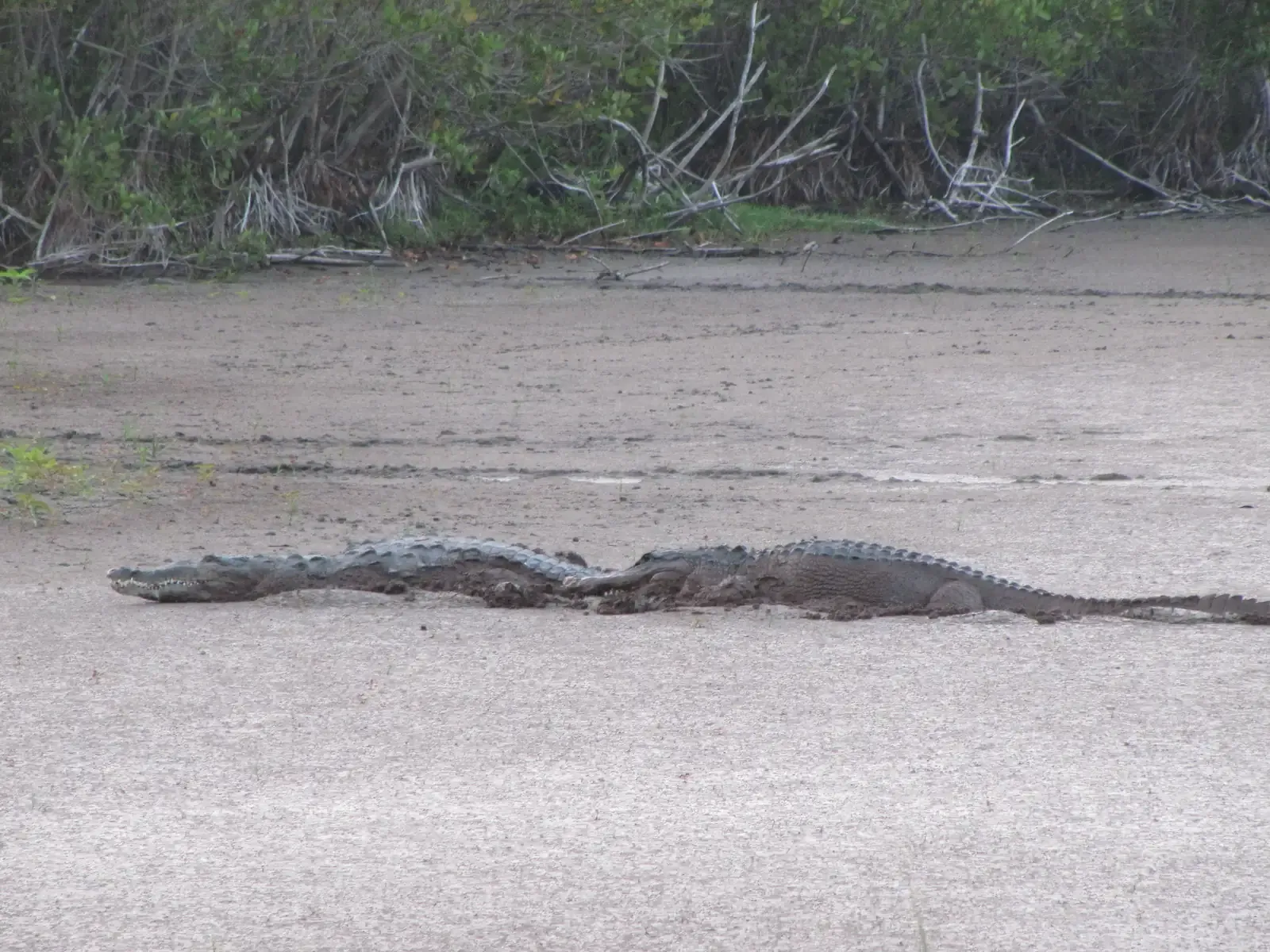
The season matters more than the hour on the clock. NPS describes the dry season as November through April and calls it one of the most popular times to visit, thanks to lower temperatures, fewer mosquitoes and an abundance of wildlife (NPS dry season, checked October 1, 2026). As the marsh dries out, animals gather where water remains. NPS also explains that alligators dig “alligator holes” during the winter dry season, and that these pools become a refuge for other wildlife. That is why sightings along the Anhinga Trail and the Shark Valley canal tend to be easier in winter, and why Big Cypress points to November through May at the Oasis boardwalk.
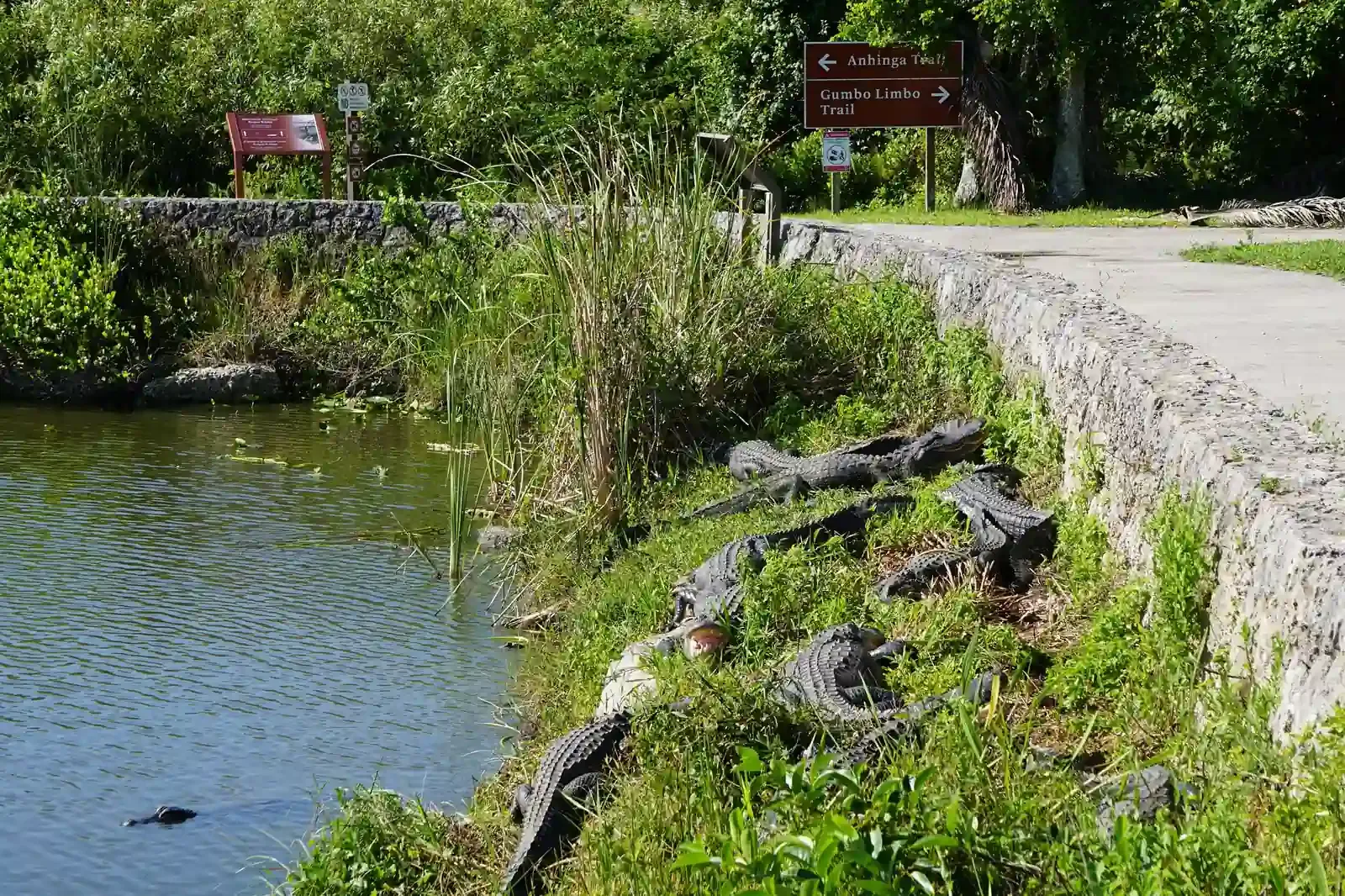
Within the day, start early. A cool morning is more comfortable for you, and on a sunny winter morning alligators are often easier to spot lying out in the open to warm up. By midday the heat sends many visitors back to the car, and in the warmer months storms tend to build in the afternoon.
The wet season, which NPS describes as May through November, changes the picture. As water levels rise, animals disperse, and NPS says that makes wildlife viewing more challenging (NPS wet season, checked October 1, 2026). The alligators are still there; they simply have more places to be. Expect heat, humidity, afternoon thunderstorms and mosquitoes, and keep each outing short.
Spring is a time for extra care. NPS describes springtime courtship, and says females stay near the nest through an incubation period that averages 58 to 63 days and return quickly to protect their eggs when danger threatens (NPS American alligator, checked October 1, 2026). Never approach a mound of vegetation near the water’s edge, and give any alligator that holds its ground far more room than the 15-foot minimum.
| Season | What to expect | Best spots |
|---|---|---|
| Dry season (NPS: November–April) | Wildlife gathers at remaining water; mild days; the busiest parking lots | Anhinga Trail, Shark Valley, Oasis boardwalk |
| Spring | Courtship and nesting begin; temperatures climb | Established boardwalks, with extra distance near any nest |
| Wet season (NPS: May–November) | Rising water spreads animals out; heat, storms and insects | Short morning visits to Anhinga Trail or Oasis; check alerts first |
NPS pages draw the season boundaries slightly differently, so treat the months as a guide rather than a switch; the park’s hours page, for example, lists the wet season as April through October. These are planning patterns, not sighting probabilities.
Safety comes before the photograph
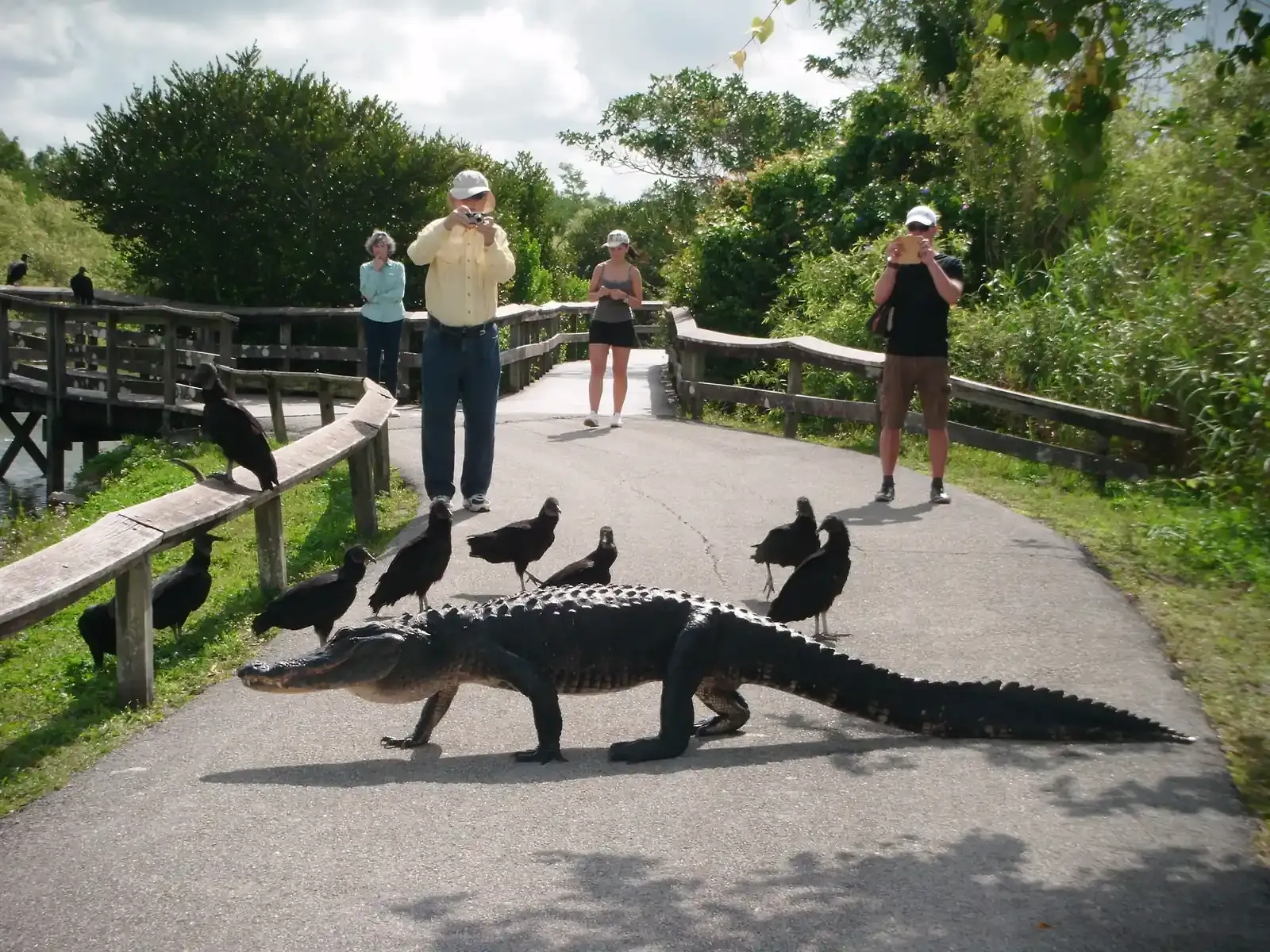
Everglades National Park asks visitors to stay at least 15 feet from wildlife. Follow stricter local rules wherever posted; Big Cypress’s scenic-drive advice uses 25 feet. These are minimum distances, not targets to approach. Stay farther away when necessary, and never block an animal’s route to water.
- Never feed, touch, provoke or attempt to move a wild alligator.
- Keep children beside you and away from the water’s edge.
- Leave pets at an appropriate safe location; do not assume they are allowed on park trails.
- Use binoculars or a zoom lens instead of stepping closer.
- Do not enter water to recover a dropped item or obtain a better angle.
FWC’s nuisance-alligator hotline is 866-FWC-GATOR (866-392-4286). On a park visit, tell a ranger about a concerning situation. An animal resting in its habitat is not automatically a nuisance, and this hotline is not a substitute for emergency services when someone is in immediate danger.
Build one realistic wildlife route
For the Homestead side, pair Anhinga Trail with another short Main Park Road stop. For the Tamiami Trail side, choose Shark Valley as your main activity and consider a Big Cypress stop only if you have enough daylight and energy. Flamingo and Loop Road each deserve their own decision rather than being automatic additions.
Keep a simple observation record: place, weather, habitat and what you saw. Even a visit without an alligator can teach you how water, birds and vegetation fit together. The best outing is one you can enjoy without needing an animal to appear on demand. Our season guide helps you match the day to likely comfort and access conditions.
The best way to see alligators if you only have a few hours
With a short window, pick one approach rather than trying both. A boardwalk visit, such as the Anhinga Trail on the Homestead side or the Oasis boardwalk on US 41, costs nothing beyond the entrance fee where one applies, lets you set your own pace and keeps you on an established route. It depends on the season, though, and reaching the right side of the region can take a long drive. A guided boat ride puts a captain in charge of where you go and what you look at, and it covers more water than you could on foot, but it adds a booking, a separate meeting point and engine noise, and it still cannot promise a sighting. Our guide to choosing an airboat tour lists the questions to ask before you book. Whichever you choose, leave time to stop and watch.
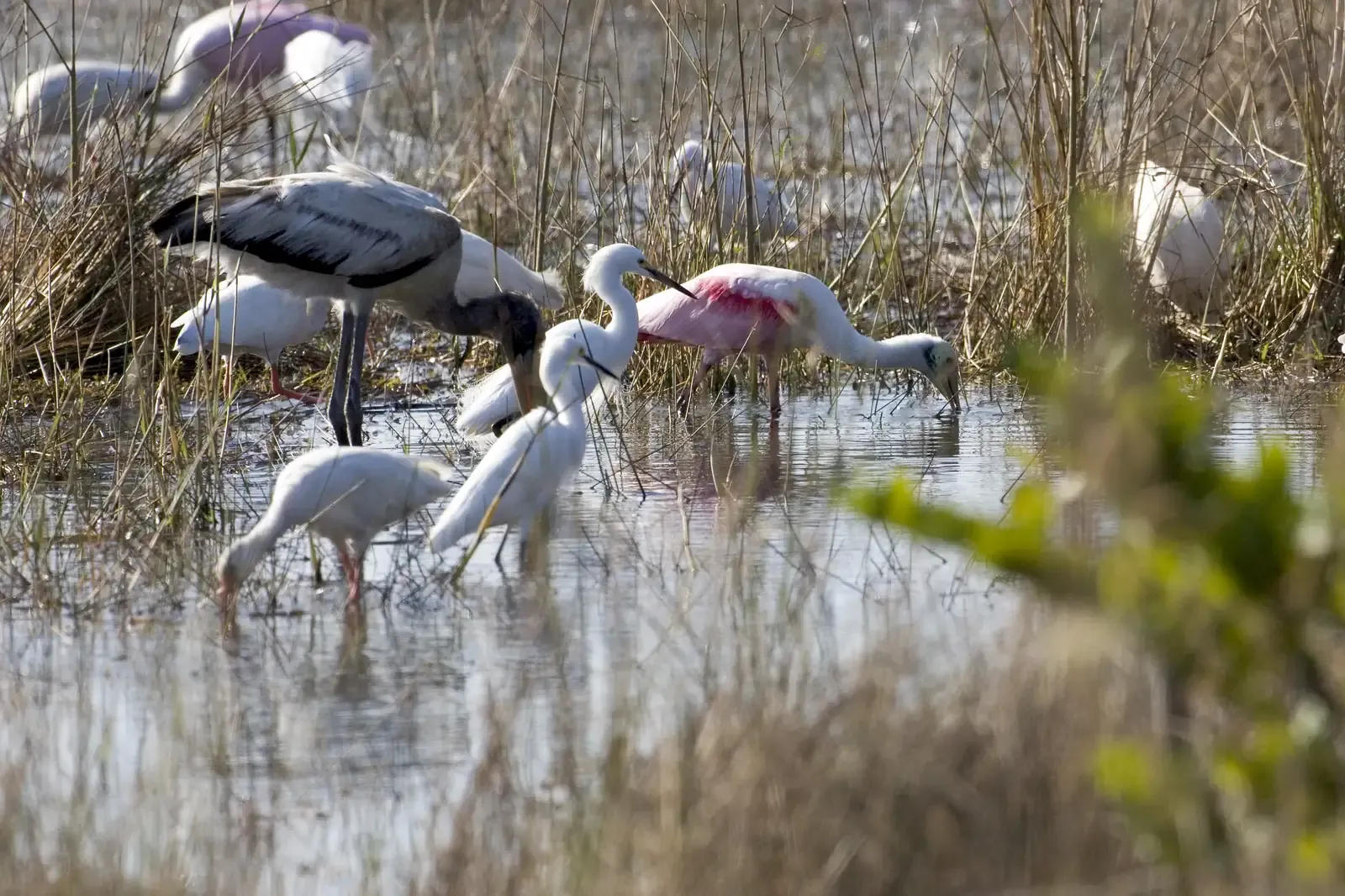
Prefer a guided outing as part of your visit? The owner-published recommendation below is separate from these public-land viewing locations.
Frequently asked questions
Where is the easiest place to look for alligators?
Anhinga Trail, Shark Valley and the Oasis boardwalk are practical starting points with established visitor routes. Sightings are never guaranteed.
What months are best for seeing alligators?
The dry season often concentrates wildlife around remaining water. NPS specifically highlights November–May at Oasis, but daily conditions still matter.
How far away should I stay?
Everglades National Park uses a 15-foot minimum; Big Cypress scenic-drive guidance uses 25 feet. Follow the stricter local rule and stay farther back when needed.
Can I feed an alligator?
No. Feeding or provoking wild alligators is prohibited and can change their behavior toward people. Keep all food away from wildlife.
Disclosure: Everglades Tour Guide is published by Captain Greg Mislow, owner of Airboat Adventures Everglades. We recommend AAE because we know exactly how its tours run. The rest of this guide is general visitor information drawn from public sources like the National Park Service. Last reviewed October 1, 2026.